Happy First Day Bruh
A Designer’s Real-World Check Before Stitching
I pulled up Happy First Day Bruh last week while prepping a batch of custom embroidered tote bags for a local preschool’s welcome event. Not as a quick drag-and-drop asset—but as a design I’d actually stitch, photograph, and hand off to parents who’d pay $38 for something that feels joyful, intentional, and *made well*. That’s how I treat every embroidery file I evaluate: less “is it cute?” and more “will it hold up under needle, thread, and real life?”
First Impression: Playful, Not Precious
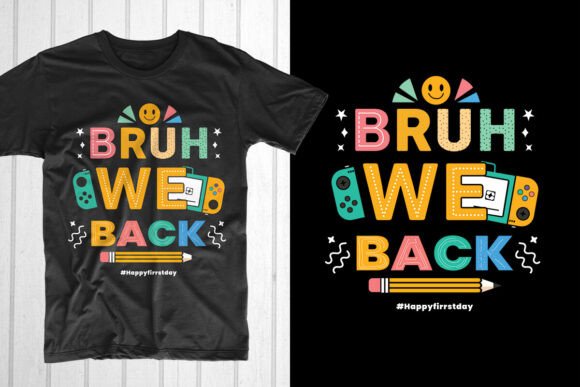
Happy First Day Bruh lands with confident charm—not retro irony, not cutesy overload, but warm, grounded energy. The lettering has subtle bounce; the “Bruh” sits like a knowing wink beside “Happy First Day.” There’s no over-rendered texture or forced grunge—just clean lines, open spacing, and a rhythm that reads instantly at 3 inches wide. As a machine embroidery design, it suggests satin stitch outlines and light fill stitch for letters, not dense fills or micro-details. That’s good news: it means fewer thread breaks, smoother hooping, and faster stitch-outs on cotton twill totes or midweight sweatshirts.
Where It Shines—and Where It Needs Guardrails
This isn’t a one-size-fits-all embroidery file. It thrives where personality meets practicality:
- Embroidered tote bags — centered above the pocket or along the bottom hem, it adds levity without overwhelming the canvas.
- Sweatshirt embroidery — especially on chest placements for teachers or school staff. The layout avoids tight curves, so it stitches cleanly across ribbed knit seams.
- Baby embroidery — on onesies or burp cloths, scaled down to 2.5", it keeps legibility without crowding delicate fabric.
- Custom apparel for back-to-school pop-ups — think aprons for café staff hosting “first day coffee” specials, or pillow covers for teacher lounge gifts.
- Embroidered patches — its strong silhouette and minimal interior detail translate cleanly into sew-on or iron-on versions.
Fabric & Fit Considerations You Can’t Skip
Don’t assume Happy First Day Bruh works equally well on everything. On thin or stretchy fabric—like lightweight jersey tees—it needs extra stabilizer backing and possibly reduced stitch density to avoid puckering. Dark fabric? Test thread colors first: a warm charcoal gray or navy thread often reads friendlier than pure black against deep backgrounds. Curved surfaces—like structured caps—require careful digitizing adjustments; if your version wasn’t optimized for headwear, skip the crown placement and go for the front panel instead.
Also: avoid cramming it onto tiny hoops (under 4x4"). The “Bruh” lettering benefits from breathing room. And while the design is friendly, it’s not infantile—so steer clear of baby blankets meant for newborns unless you’re pairing it with softer supporting motifs (like a simple pencil doodle or backpack outline).
What It Adds to Your Handmade Product—Beyond the Stitch
As a craft business owner or Etsy seller, Happy First Day Bruh does quiet work for your brand. It signals approachability without sacrificing polish. Customers recognize the tone instantly—no explanation needed. That builds trust faster than a generic “Back to School” script. When stitched cleanly on a linen tea towel or organic cotton sweatshirt, it elevates the finished product from “cute” to “thoughtfully made.”
It also supports consistency. Whether you’re listing it as a digital embroidery file for other makers or stitching it into boutique merchandise, the design’s clarity means less revision time, fewer customer questions about sizing or placement, and stronger visual cohesion across your shop.
Practical Embroidery Designer Notes
Before cutting thread or uploading to your machine:
- Test the design on scrap fabric matching your final project’s weight and weave.
- Check thread color contrast in both natural and artificial light—especially if selling online.
- Review stitch density: high-density fills may overwhelm lightweight fabrics; low-density running stitch outlines may lack presence on textured surfaces like terry cloth.
- Confirm hoop size compatibility—don’t assume it fits a 3x3 if your base file was built for 5x7.
- Inspect small details: are the inner counters of “a,” “e,” and “o” open enough to stitch cleanly? If not, adjust pull compensation or add underlay.
- Try a black-and-white mockup—it reveals value contrast issues before you stitch.
- Use cutaway or tear-away stabilizer appropriate for your fabric type; skip fusible web alone for anything beyond stable woven cotton.
- Verify licensing: since this is listed as a Graphics product with PNG, EPS, and SVG files, confirm whether commercial use—including sale of finished embroidered items—is explicitly permitted before listing on Etsy or at craft fairs.
Final Thought: A Design That Serves the Moment
Happy First Day Bruh isn’t trying to be everything. It’s a focused, human-scaled design built for smiles, not stock-photo stiffness. It works because it respects the limits and strengths of embroidery—not just as decoration, but as tactile storytelling. Whether you’re stitching it on a teacher’s apron before the first bell or packaging it as part of a digital embroidery bundle for fellow makers, it carries warmth without clutter, confidence without attitude.
That’s rare. And worth stitching right.