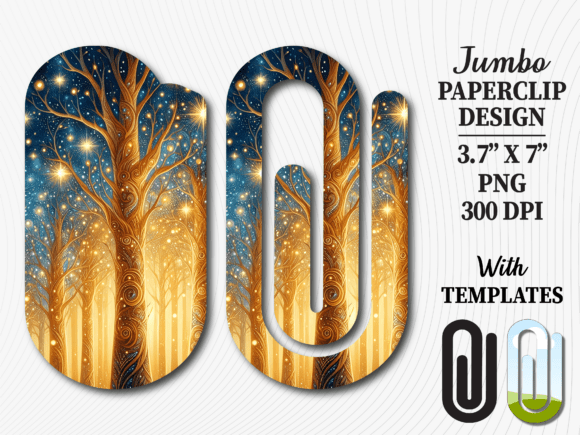
Golden Forest Trees Jumbo Paperclip PNG
A Designer’s First Glance: Whimsy with Quiet Confidence
When Golden Forest Trees Jumbo Paperclip PNG landed in my inbox, I paused—not because it screamed for attention, but because it invited quiet study. It’s not a bold typographic statement or a dense floral motif. Instead, it’s a delicate, stylized cluster of slender trees wrapped around a jumbo paperclip shape, rendered in warm gold tones against transparent background. The mood is gentle woodland charm meets modern utility—like tucking a tiny forest into your notes, your lunchbox, or your child’s backpack strap. As an embroidery designer who’s stitched everything from nursery quilts to boutique aprons, I immediately pictured this on a linen tea towel, a canvas tote, or the chest pocket of a soft cotton baby romper.
Where This Design Truly Shines in Real Embroidery Projects
I tested Golden Forest Trees Jumbo Paperclip PNG as part of a small-batch run of embroidered kitchen towels for a local café pop-up. The design scaled beautifully at 3.5" wide—large enough to read clearly, small enough to feel intentional. On medium-weight linen, the tree trunks held crisp definition with satin stitch, while the canopy translated well using a light fill stitch and subtle running stitch accents. It didn’t overwhelm the fabric, nor did it disappear. That balance is rare—and vital—for craft businesses where handmade presentation directly impacts perceived value.
This design naturally fits personalized gifts (think: monogrammed baby onesies with a tiny paperclip + initials), custom apparel like unisex sweatshirts for eco-conscious brands, and embroidered patches sewn onto denim jackets or tote bags. Its clean silhouette also works well as a digital embroidery file for printable mockups—Etsy sellers can showcase it on flat-lay photos of aprons or pillow covers without visual clutter. As a graphic, it bridges Crafts and Graphics seamlessly: use it as-is for sublimation on jumbo paperclips (as intended), or reinterpret it as a machine embroidery design for stitched texture and dimension.
Where to Proceed Thoughtfully—Not Just Optimistically
Let’s be direct: Golden Forest Trees Jumbo Paperclip PNG isn’t ideal for every surface or stitch method. Its fine branches and tapered tips demand care on textured fabrics like bouclé or heavy terry cloth—those details can blur or snag. On stretchy fabric (think: ribbed baby onesies or performance tees), stabilizer choice becomes non-negotiable; a cutaway + tear-away combo kept my test stitches clean and secure. And while the gold tone reads beautifully on cream or oat-colored linens, it risks looking muddy on deep charcoal or navy unless you adjust thread colors thoughtfully—test the design on scrap fabric first, especially if stitching for commercial embroidery clients.
It’s also not built for tight curves or ultra-small hoops. I tried scaling it down to 1.75" for a cap front—it lost legibility fast. The paperclip’s curve flattens awkwardly under tension, and the trees begin to merge. Save this for flat or gently rounded surfaces: tote bag flaps, pillow covers, tea towel hems, or the back yoke of a lightweight jacket. Avoid layering it over seams or high-friction zones (like elbow patches) unless you’re confident in your stabilizer strategy and stitch density control.
What This Design Says About Your Brand—Before a Single Stitch
Your customers don’t just buy a product—they buy intention. When someone sees Golden Forest Trees Jumbo Paperclip PNG stitched cleanly on a handmade item, they register subtlety, craftsmanship, and quiet storytelling. It doesn’t shout “handmade”—it whispers it. That builds trust, especially for Etsy sellers and small shop owners whose buyers value authenticity over flash. I’ve watched customers pause longer at items featuring this kind of understated nature motif: it feels personal, grounded, and gift-ready—perfect for holiday embroidery, wedding favors, or nursery decor that avoids cliché.
That said, its strength lies in restraint. Overusing it—say, as a repeating border on a blanket or across multiple panels of a garment—dilutes its charm. Use it once, with purpose: centered on a sweatshirt chest, nestled beside a name on a baby bib, or anchoring a minimalist tote bag design. That’s how it elevates your finished product from “nice” to “thoughtfully made.”
Practical Notes Every Embroidery Designer Should Run Through
- Check hoop size compatibility before digitizing—this design likely needs at least a 4"x4" hoop for best clarity.
- Review stitch density carefully: too dense, and the paperclip outline may pucker; too sparse, and the trees lose definition.
- Inspect small details in your embroidery software—especially the tapering ends of branches and the inner curve of the paperclip.
- Test thread colors on both light and dark fabric backgrounds. Gold thread pops on ivory, but warm bronze or olive green can add depth on charcoal.
- Use proper stabilizer: medium-weight cutaway for stable fabrics, hybrid for knits, and always baste first on slippery surfaces like satin-backed canvas.
- Confirm licensing before selling finished items or digital products—since this is labeled a Graphics asset, verify whether commercial embroidery rights are included.
- Try black-and-white mockups to assess contrast and silhouette strength before committing to full-color thread.
In short, Golden Forest Trees Jumbo Paperclip PNG isn’t flashy—but it’s memorable. It’s not complex—but it rewards attention. For craft business owners building a cohesive, nature-inspired line—or for embroidery designers seeking a versatile, emotionally resonant motif—it’s a quietly powerful addition to your design assets. Just remember: let the forest breathe, honor the paperclip’s shape, and stitch with intention. That’s where real handmade value begins.